Baechujeon (Korean Cabbage Pancakes) – My Korean Kitchen
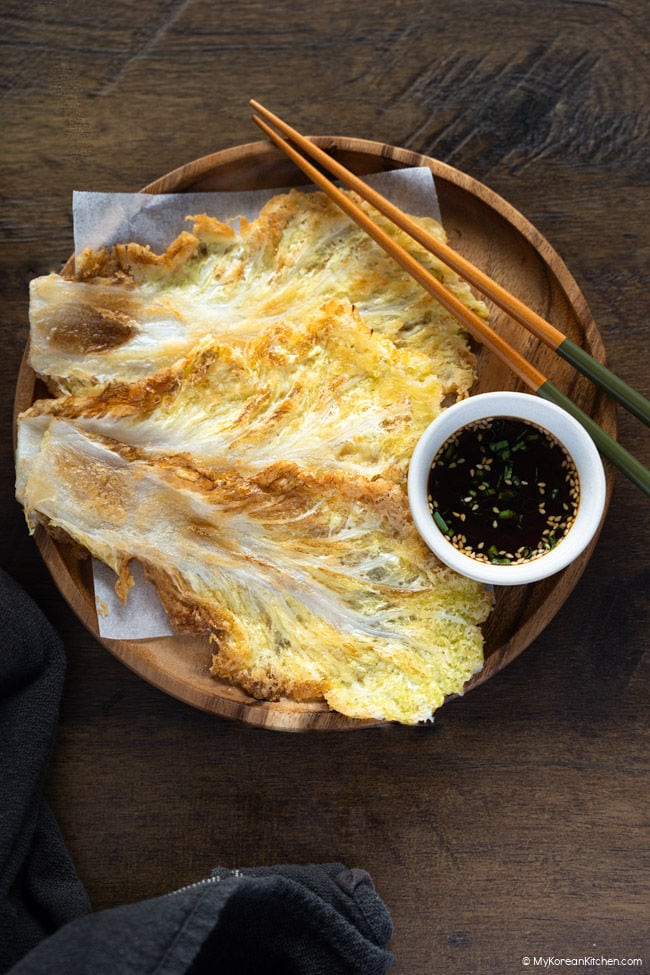
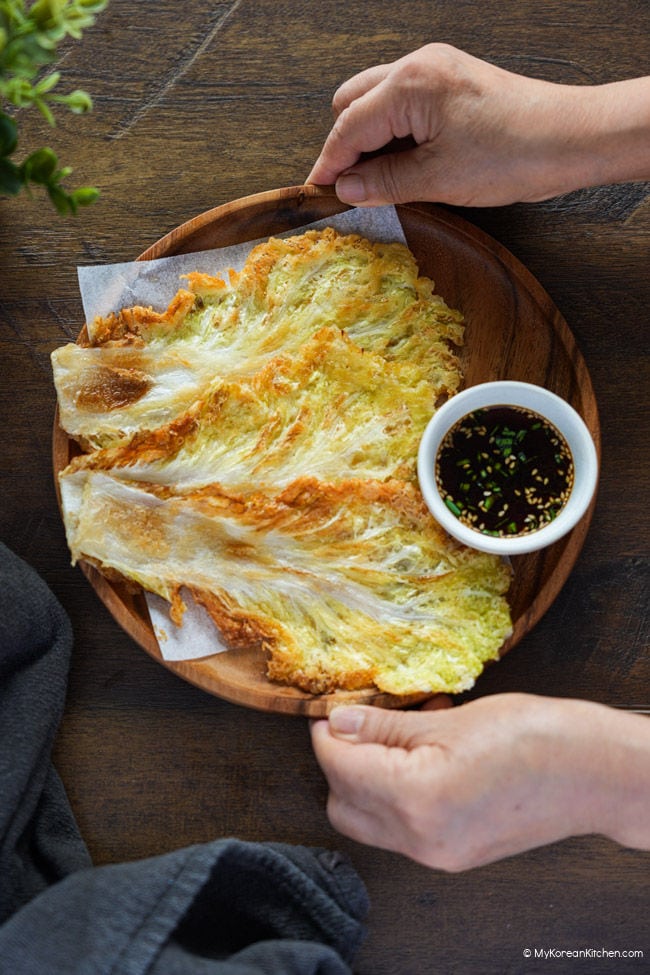
Baechujeon (배추전) is a traditional Korean pancake made with napa cabbage. The sweet, tender leaves are lightly coated in batter and pan-fried until crisp around the edges.
What sets this version apart is the addition of nutty perilla oil and savory saeujeot, which bring depth and balance while allowing the natural flavor of the cabbage to remain at the center. Simple and understated, it is a dish built on a few carefully chosen ingredients.
Why You’ll Love This Recipe
- A gentle, balanced flavor. Sweet napa cabbage, nutty perilla oil, and savory saeujeot complement one another without any one flavor overpowering the rest.
- A light, delicate batter. Just enough batter coats each cabbage leaf, allowing its natural sweetness and texture to shine through.
- A satisfying contrast in texture. Crisp, golden edges give way to tender, juicy napa cabbage.
- Versatile and easy to serve. Enjoy it as a snack, side dish, or as part of a Korean meal.
Ingredients
Cabbage
- 12 medium napa cabbage leaves (350 to 450 g / 12.3 to 15.9 oz)
- 1 Tbsp fine sea salt
- 2 cups warm water
Batter
- 1/2 cup Korean pancake mix (buchim garu), 70 g (2.5 oz)
- 1/2 cup tempura mix, 70 g (2.5 oz)
- 3/4 cup + 2 Tbsp cold water
- 1/2 tsp salted shrimp liquid (from saeujeot), or anchovy fish sauce
- 1/2 tsp perilla oil
For cooking
- 1 to 2 Tbsp neutral cooking oil, per cabbage leaf
How to Make Baechujeon
1. Prepare the cabbage
Separate the napa cabbage leaves and rinse them well under cold running water.
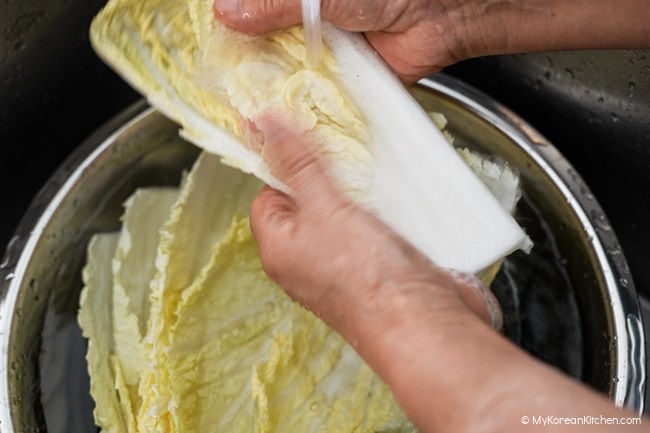
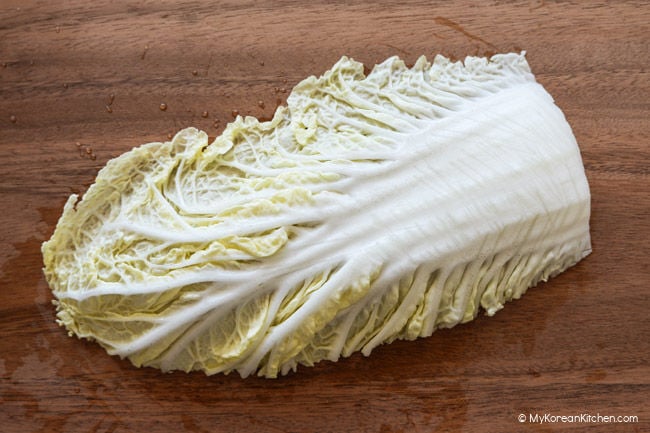
Using a knife, make a few shallow cuts across the thicker white stem of each cabbage leaf, similar to lightly scoring squid or tenderizing meat. This helps the stems soften more evenly and makes the leaves easier to fold during cooking.
2. Salt the cabbage
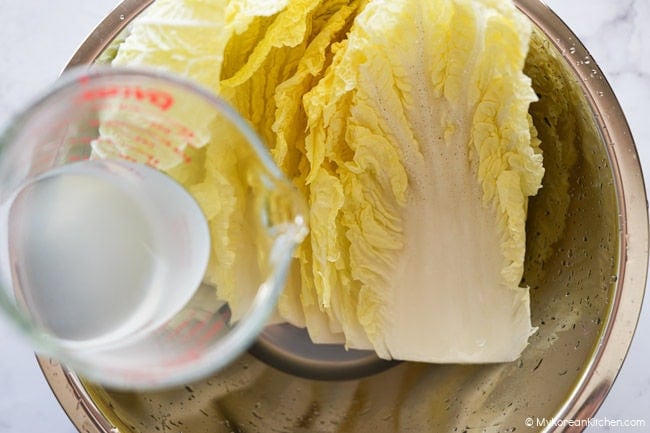
Dissolve the salt in the warm water in a large measuring cup. Place the cabbage leaves in a mixing bowl, then pour over the salt water and gently toss to coat evenly. Let them rest for 5 minutes, or until slightly softened and pliable. Meanwhile, prepare the batter.
3. Make the batter
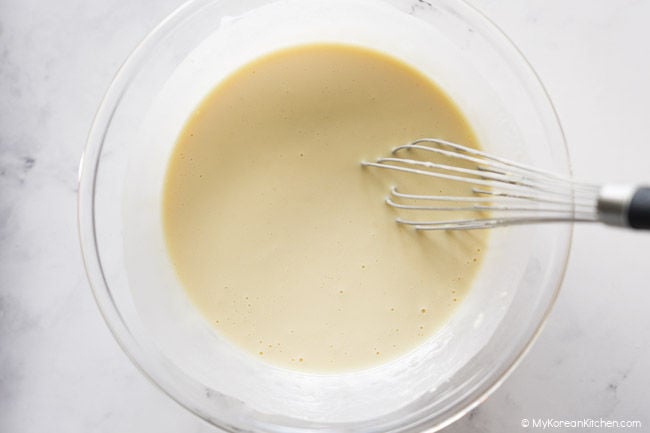
In a bowl, combine the batter ingredients and mix until smooth. The batter should be thin enough to coat the cabbage lightly without feeling heavy.
4. Rinse and drain
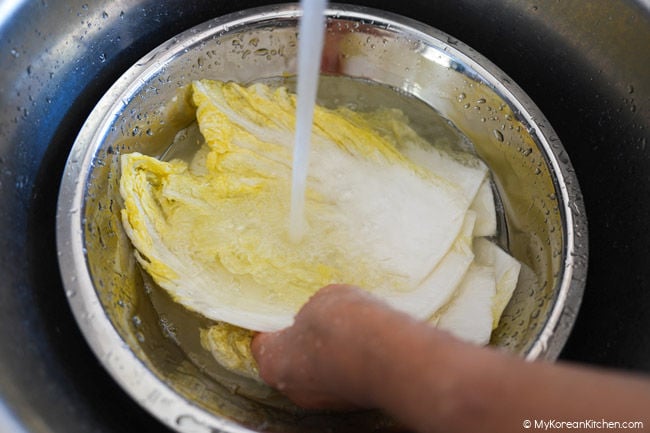
Briefly rinse the cabbage under running water, then gently shake off the excess water. If the leaves are still dripping, lightly pat them with paper towels. They should remain lightly moist, not completely dry.
5. Coat and cook the cabbage
Pour the batter into a rimmed baking sheet or large plate. Heat a thin layer of oil in a large frying pan over medium heat.
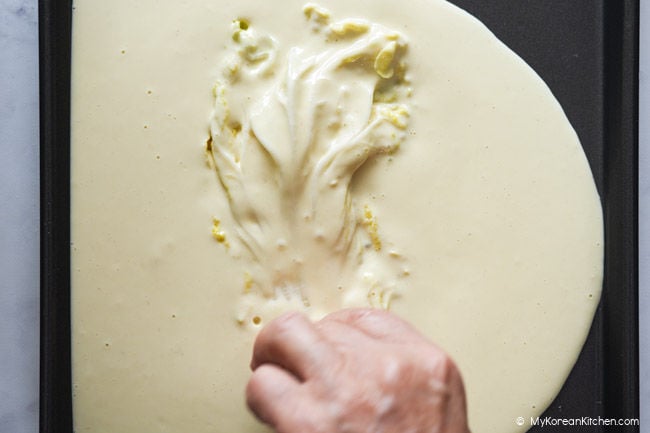
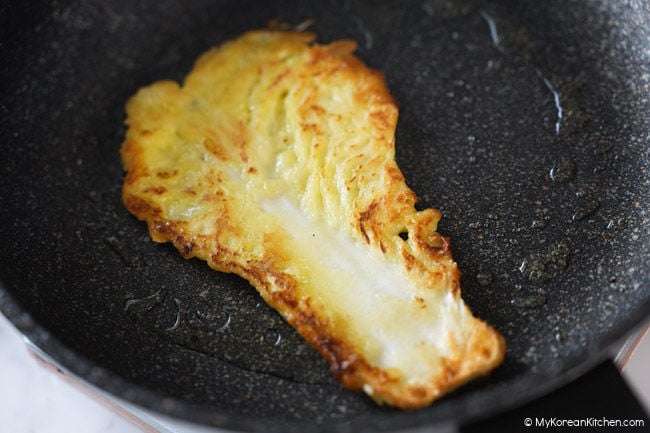
Dip one cabbage leaf into the batter, coating both sides lightly, and let the excess batter drip off. Immediately place it in the pan. Repeat with only as many leaves as will fit comfortably in a single layer.
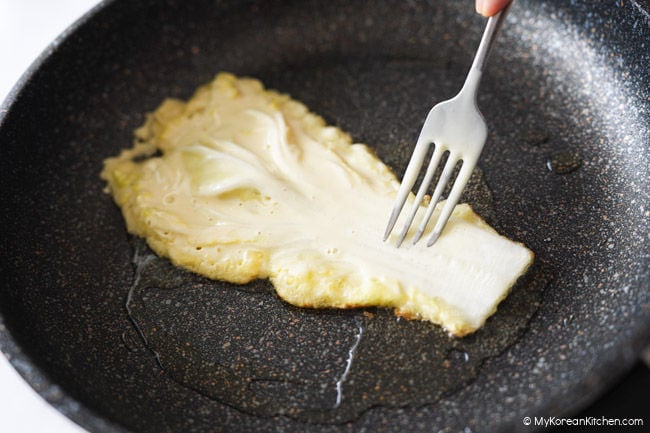
Cook for 1 to 2 minutes per side, or until lightly golden with crisp edges. Adjust the heat as needed so the pancakes cook gently without burning. Repeat with the remaining cabbage, adding more oil as needed.
6. Serve
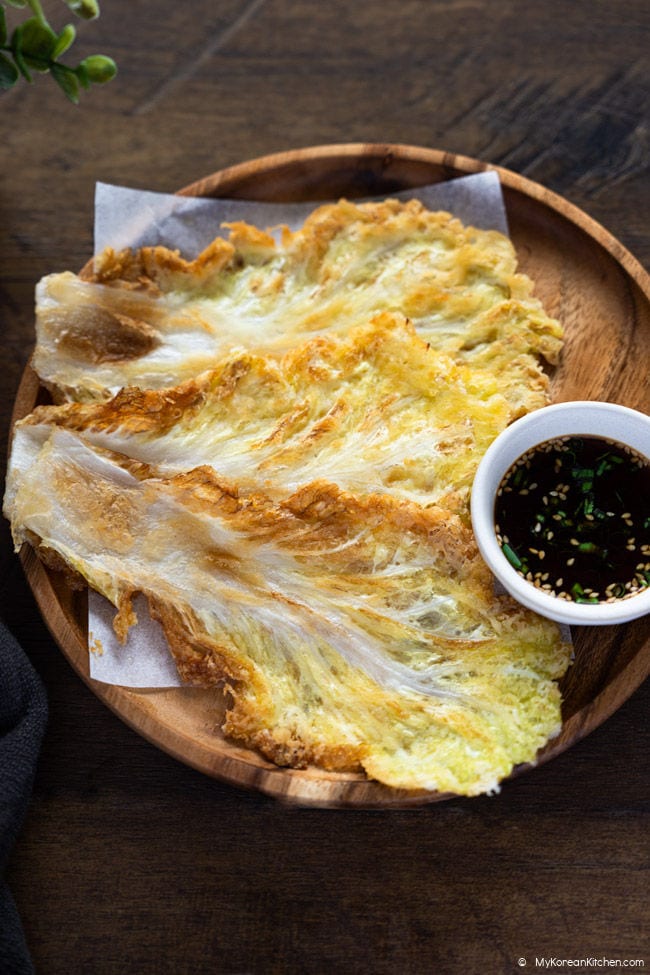
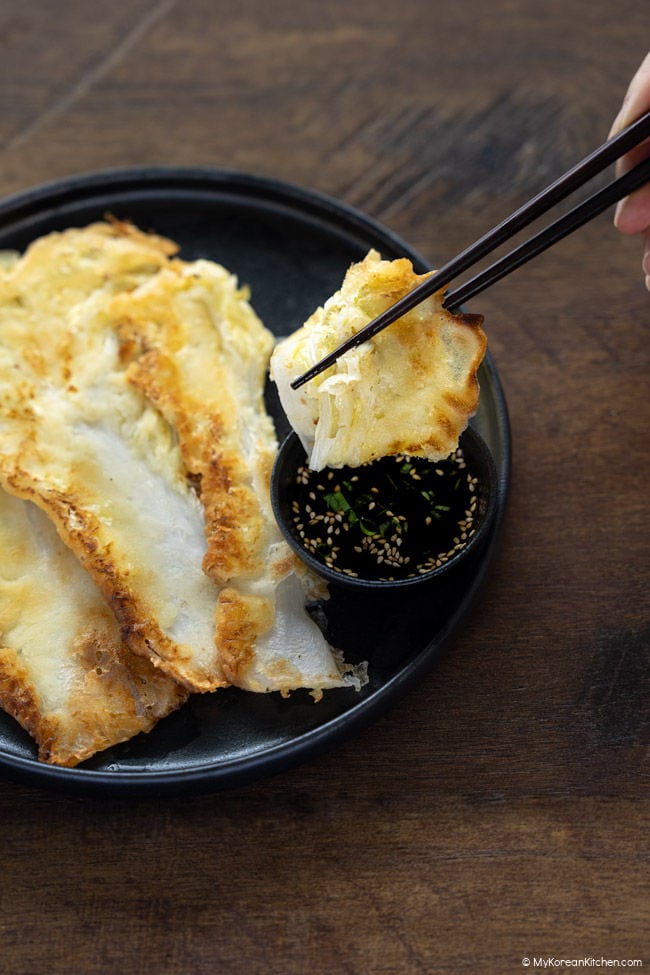
Serve warm with the dipping sauce on the side.
Tips for the Best Baechujeon
- Serve them warm. These pancakes are best enjoyed freshly cooked, while the edges are still lightly crisp and the cabbage is warm and tender. They soften as they cool, so serve them as soon as possible for the best texture and flavor.
- Use saeujeot for deeper flavor. I find that saeujeot gives the pancakes a deeper, more rounded savory flavor than Korean anchovy fish sauce, with a richer umami flavor.
- Choose smaller, tender cabbage leaves. Smaller or younger napa cabbage leaves work best because they soften quickly, lie flatter in the pan, and produce a lighter pancake with more delicate, crisp edges. Very large or thick leaves can feel heavier and may need to be salted a little longer, until the stems are slightly softened and flexible.
More Korean Pancake Recipes To Try
If you enjoyed this baechujeon, here are a few more Korean pancake recipes to try.
- Kimchi Pancake – Crisp around the edges and packed with tangy, well-fermented kimchi, this savoury pancake is one of Korea’s most popular comfort foods. It’s easy to make and perfect as a snack, side dish, or light meal.
- Seafood Pancake – Loaded with seafood and green onions, this classic Korean pancake is crisp on the outside and tender inside. It’s a popular choice for sharing and pairs especially well with a simple dipping sauce.
- Korean Chive Pancake – Fresh garlic chives give this light, savoury pancake its distinctive aroma and flavour. With crisp edges and a tender centre, it’s an easy way to enjoy one of Korea’s favourite seasonal vegetables.
- Korean Potato Pancake -Made with finely julienned potatoes, this crispy potato pancake has golden, lacy edges and a tender bite. With just a handful of ingredients, it’s a simple dish that lets the natural flavour of the potatoes shine.
- Prepare the cabbage. Separate the napa cabbage leaves and rinse them well under cold running water. Using a knife, make a few shallow cuts across the thicker white stem of each cabbage leaf, similar to lightly scoring squid or tenderizing meat. This helps the stems soften more evenly and makes the leaves easier to fold during cooking.
Salt the cabbage. Dissolve the salt in the warm water in a large measuring cup. Place the cabbage leaves in a mixing bowl, then pour over the salt water and gently toss to coat evenly. Let them rest for 5 minutes, or until slightly softened and pliable. Meanwhile, prepare the batter.
Make the batter. In a bowl, combine the batter ingredients and mix until smooth. The batter should be thin enough to coat the cabbage lightly without feeling heavy.
Rinse and drain. Briefly rinse the cabbage under running water, then gently shake off the excess water. If the leaves are still dripping, lightly pat them with paper towels. They should remain lightly moist, not completely dry.
- Coat and cook the cabbage. Pour the batter into a rimmed baking sheet or large plate. Heat a thin layer of oil in a large frying pan over medium heat. Dip one cabbage leaf into the batter, coating both sides lightly, and let the excess batter drip off. Immediately place it in the pan. Repeat with only as many leaves as will fit comfortably in a single layer.Cook for 1 to 2 minutes per side, or until lightly golden with crisp edges. Adjust the heat as needed so the pancakes cook gently without burning. Repeat with the remaining cabbage, adding more oil as needed.
- Serve. Serve warm with the dipping sauce on the side.
- Serve them warm. Baechujeon is best enjoyed freshly cooked, while the edges are lightly crisp and the cabbage is warm and tender. The pancakes soften as they cool.
- Use saeujeot for deeper flavor. I find that saeujeot gives the pancakes a deeper, more rounded savory taste than Korean anchovy fish sauce, with richer umami.
- Choose smaller, tender cabbage leaves. Smaller or younger napa cabbage leaves soften quickly, lie flatter in the pan, and produce lighter pancakes with more delicate, crisp edges. Very large or thick leaves may feel heavier and need a little longer to soften in the salt water.
Calories: 54kcal | Carbohydrates: 9g | Protein: 1g | Fat: 1g | Saturated Fat: 0.1g | Polyunsaturated Fat: 0.4g | Monounsaturated Fat: 1g | Trans Fat: 0.01g | Sodium: 619mg | Potassium: 73mg | Fiber: 0.5g | Sugar: 0.4g | Vitamin A: 89IU | Vitamin C: 8mg | Calcium: 25mg | Iron: 0.3mg
The nutrition information shown is an estimate provided by an online nutrition calculator. It should not be considered a substitute for a professional nutritionist’s advice.