Best Dashi Packets to Buy in Japan • Just One Cookbook
Dashi packets are the simplest way to make Japanese soup stock. Steep one in simmering water, and in about five minutes, you have the base for miso soup, hot pots, rolled omelettes, and more. This guide covers which type to choose, where to find them, and what to cook once you get home.
I know how overwhelming a first trip to Japan can be, especially when it comes to food. What’s worth buying? How do you use it once you’re home?
My Souvenir Cooking series is here to help. This series rounds up the best Japanese food souvenirs and teaches you how to use them in your own kitchen. This first post is all about dashi packets.
Why You Should Have Dashi Packets in Your Kitchen
Dashi packets (だしパック) are one of my top souvenir recommendations for anyone visiting Japan. They’re light, shelf-stable, easy to pack, and the savory backbone of countless Japanese recipes. Think of dashi as Japan’s answer to beef or chicken stock.
I use these packets to add deep, savory flavor without simmering stock from scratch. I find them far better than instant dashi powder since most are additive- and salt-free for a flavor that’s close to homemade. Here’s what makes them worth the suitcase space:
- Variety you won’t find overseas. A well-stocked supermarket will carry every type of dashi under the sun.
- Regional specialties. Head south to Kyushu for flying fish dashi, or north to the Hokkaido region for fresh kombu varieties.
- Additive-free options. Brands like Kayanoya and Yamaki make additive-free packets that are widely available in Japan but harder to find abroad.

Where to Buy Dashi Packets in Japan
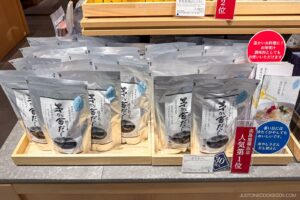
Dashi packets are available in nearly any Japanese grocery store, but a few spots are especially worth seeking out.
- Large supermarkets. Chains like LIFE and AEON carry the widest everyday selection, from budget brands to premium options, all in one place. Look for the aisle marked 出汁 or だし, the Japanese word for dashi.
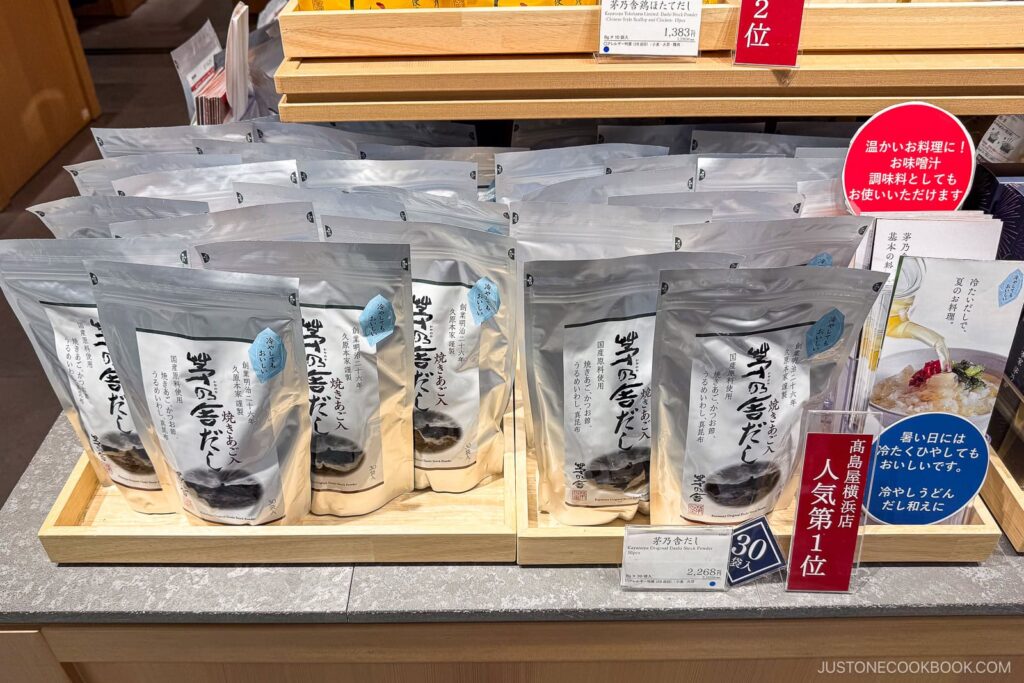
- Depachika. Depachika (デパ地下) are the basement food halls inside Japanese department stores like Isetan, Takashimaya, and Mitsukoshi. In this foodie paradise, discover gift-quality dashi packets perfect for omiyage (お土産, souvenirs). My favorite is the Shinjuku ISETAN Food Floor.
- Specialty shops. Kayanoya and Ninben offer the widest range of premium products with seasonal varieties you won’t see elsewhere. For something more customized, create your own dashi stock at Dashi Okume in Tokyo’s Azabudai Hills mall. Akomeya is also a popular premium grocery and kitchenware store with locations around the country.
- Airports and train stations. Kayanoya has counters at Tokyo Station as well as items available at most airports. Convenient for picking up last minute souvenirs.


Choosing the Right Dashi Packet
Walking into any of these stores, whether a specialty shop or an all-purpose supermarket, will feel overwhelming but in the best way. Use this list to choose the right dashi packet for your desired recipes back home.

- Awase Dashi (合わせだし) – If you are unsure which dashi packet is right for you, choose this. Awase dashi blends katsuobushi (bonito) and kombu (kelp) for an all-purpose stock that works well in most Japanese dishes.


- Katsuo Dashi (鰹だし) – Made entirely with bonito flakes for a strong and smoky umami. Great for clear soups and simmered dishes like Oden (Japanese Fish Cake Stew).
- Kombu Dashi (昆布だし) – Made with pure kombu (kelp). Ideal for delicate vegetable dishes and clear soups with a clean, subtle flavor.

- Vegan Dashi or Shojin Dashi (精進だし) – Made from kombu and dried shiitake mushrooms, traditionally used in shojin ryori (Buddhist temple cuisine). Use it in heartier vegetable dishes, simmered foods, and noodle broths.

- Iriko (Niboshi) Dashi (いりこだし, 煮干しだし) – Made with dried baby anchovies or sardines. It has a richer, fish-forward taste ideal for stronger soups like ramen.
- Ago Dashi (あごだし) – Made with grilled flying fish. Slightly sweeter than bonito-based dashi. Wonderful for soba and refined soups.
Shopping Tip: Look for the characters 無添加 (mutenka) on the package. This means “no additives.” These packets skip the MSG and preservatives, for a flavor closer to homemade dashi.

Making Dashi from a Packet
Once you are back home, replicating all the dishes you loved in Japan will be at the top of your list. Here is how to use a dashi packet—about five minutes start to finish:
- Add 2 cups of water and 1 dashi packet to a saucepan. Do not open the packet in the water. Use it like a teabag.
- Bring to a boil over medium heat. Shake or press the packet gently to release more flavor once the water boils.
- Reduce to medium-low. Simmer for 2 to 3 minutes.
- Remove and discard the packet. Your dashi is ready to use.
Store leftover dashi in the refrigerator for up to 4 days.
For the video, a printable card, and the packet Nami buys herself, see her Dashi Packet recipe.
What to Cook with Dashi Packets
Once you’ve stocked up, try these recipes to put your dashi packets to use right away.
- Homemade Miso Soup – Enjoy the miso soup you fell in love with in Japan easily at home. All you need is a dashi packet and miso for the base. Add your favorite fillings like vegetables and tofu.
- Tamagoyaki – The sweet, layered Japanese rolled omelette from every hotel breakfast buffet and convenience store bento. Dashi is what gives it that custard texture.
- Okonomiyaki – That savory aroma and flavor you remember from Osaka? It starts with dashi mixed right into the sizzling batter.
- Udon Noodle Soup – Relive slurping udon noodles from a small standing stall, right in your own kitchen.
- Nikujaga – The dish Japanese people name when you ask what tastes like home. Dashi is the base the meat and potatoes simmer in.


How to Store Dashi Packets
Keep unopened packages in a cool, dry pantry. Once opened, transfer to an airtight container such as an OXO container. Add the desiccant (silica gel) that comes with the dashi package to keep the packets dry.
Use within a few months for best flavor. Most packets have a best-by date (shōmi kigen, 賞味期限) printed on the package, usually 8 to 12 months out.
Where to Restock
Once you’ve worked through all the dashi in your suitcase, look for more dashi packets at most Japanese grocery stores and Asian markets. Kayanoya and Yamasan packets are available on Amazon.
FAQ
Can I bring dashi packets home through customs?
Yes. I recommend declaring them. Sealed, commercially packaged dashi is exactly what customs expects to see, and APHIS does not regulate most seafood, so bonito-based packets are fine. Declaring costs nothing; failing to declare is what causes problems. This is US guidance. Please check your own country’s rules.
Can I reuse a dashi packet?
Yes. Reuse it for a lighter second steep, ideal for cooking rice or a delicate vegetable soup. But it won’t be as flavorful as the first steep. A used packet is wet, so use it on the same day.
Are dashi packets vegan?
Most contain bonito or other dried fish, so they are neither vegan nor vegetarian. Look for kombu dashi or shiitake-based shojin dashi for plant-based options.
Can I open the dashi packet and use the contents directly?
To make dashi broth, you do not open the packet directly into the boiling water. Some packets can be opened and used as a dry seasoning for dishes like fried rice, omelettes, and stir-fries.
How are dashi packets different from dashi powder?
Dashi packets steep like tea bags and produce a cleaner, more nuanced flavor. Dashi powder dissolves instantly but tends to taste flatter and saltier. If you have five minutes, the packet is worth it.
If you take one thing home from your trip to Japan, make it dashi packets. They’re inexpensive and light, and they’ll quickly transform your Japanese cooking into the real thing.