Homemade Pork Tocino (Easy Recipe)
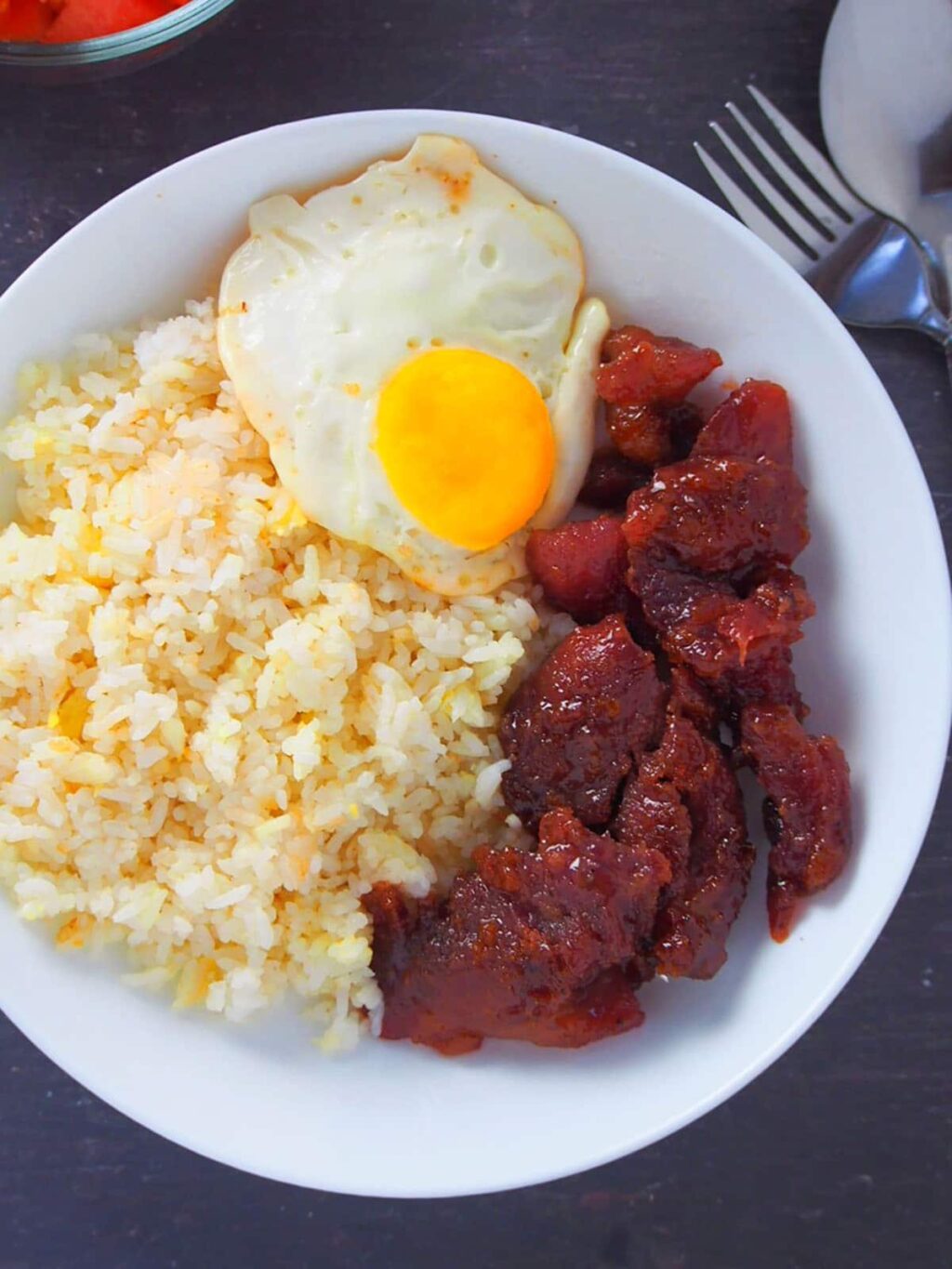
Wake up to the ultimate Filipino breakfast! This homemade Pork Tocino is perfectly sweet, savory, and caramelized with deliciously crisp edges. It’s super easy to make with simple pantry ingredients and without preservatives. Serve this tender, cured pork with garlic-fried rice and a sunny-side-up egg for a classic „Tocilog” experience.
Different regions of the Philippines are known for various specialties, and we, Kapampangans, are known for the best pork tocino, tapa, and longganisa.
Pork tocino is Filipino cured meat made of beef, chicken, or pork. This regional delicacy has evolved to be a delicious balance of sweet and salty, but traditional Kapampangan burong (cured) babi (pork), as I remember it, is fermented at room temperature to achieve a slightly sour taste. For food safety, I highly recommend curing the meat in the refrigerator for no more than 3 days, then immediately freezing it.
It’s so easy to make at home; you’ll never have to buy it again! I suggest marinating a few pounds and freezing it for future use. Portion out in individual resealable bags, and you’ll have a delicious meal ready in a pinch.
Meat cut to use
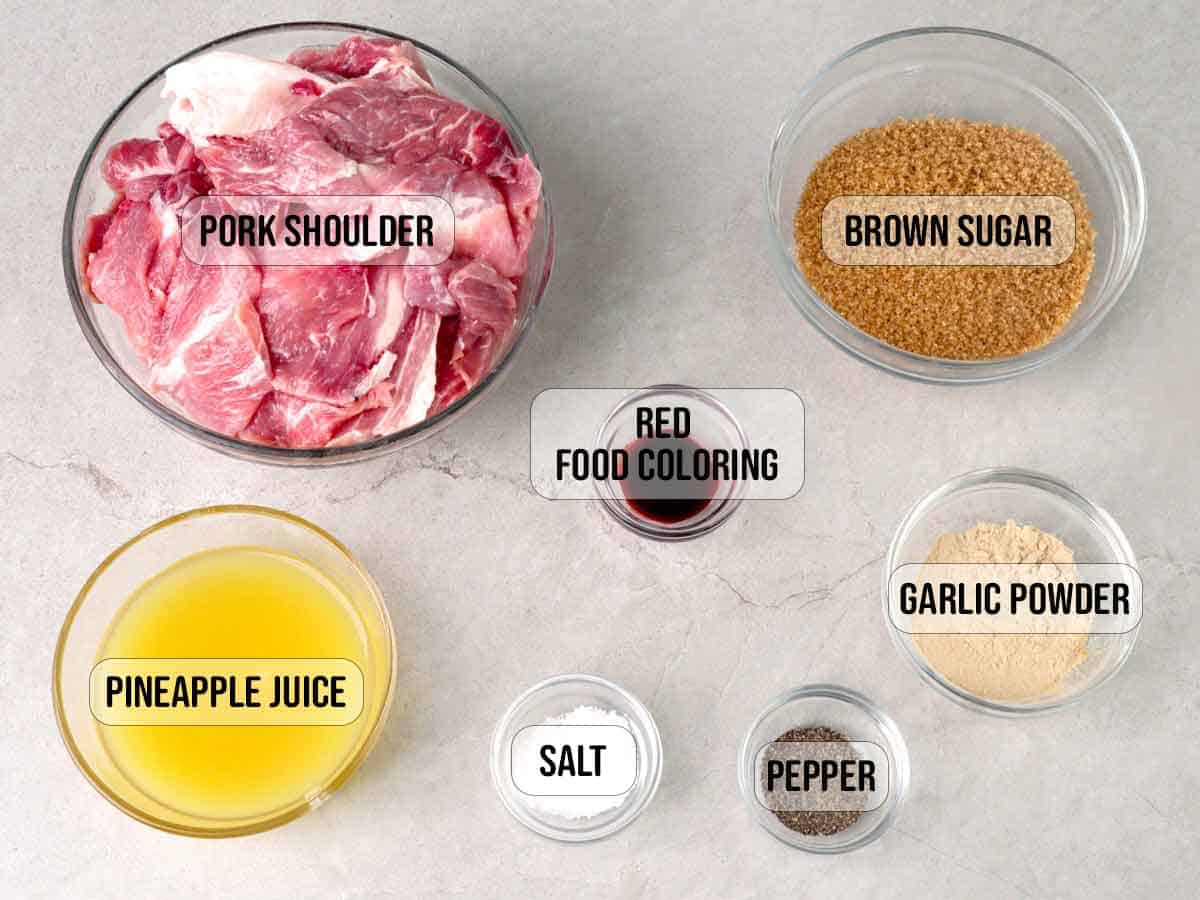
I find tenderloin (lomo) too lean and pork belly (liempo) too fatty. Tocino, like our iconic BBQ pork, is best made with Boston butt (kasim), also known as pork shoulder, which has a good mix of fat and meat.
Marinade ingredients
- Traditional pork tocino includes salitre (saltpeter), a food preservative and colorant. The recipe below, however, uses basic pantry ingredients and has no added preservatives. Our marinade is a simple mixture of salt, sugar, garlic powder, and pepper to bring on the sweet, garlicky flavors you’ll love.
- Pineapple juice is optional. It helps tenderize the meat and balances the sweetness with a hint of fruity tang. You can try swapping it for anise wine for a flavor switch.
- The red food coloring is for aesthetic purposes only and can be omitted. Not a fan of food coloring? Substitute about 1 teaspoon of atsuete powder or ¼ cup of banana ketchup.
How to make pork tocino
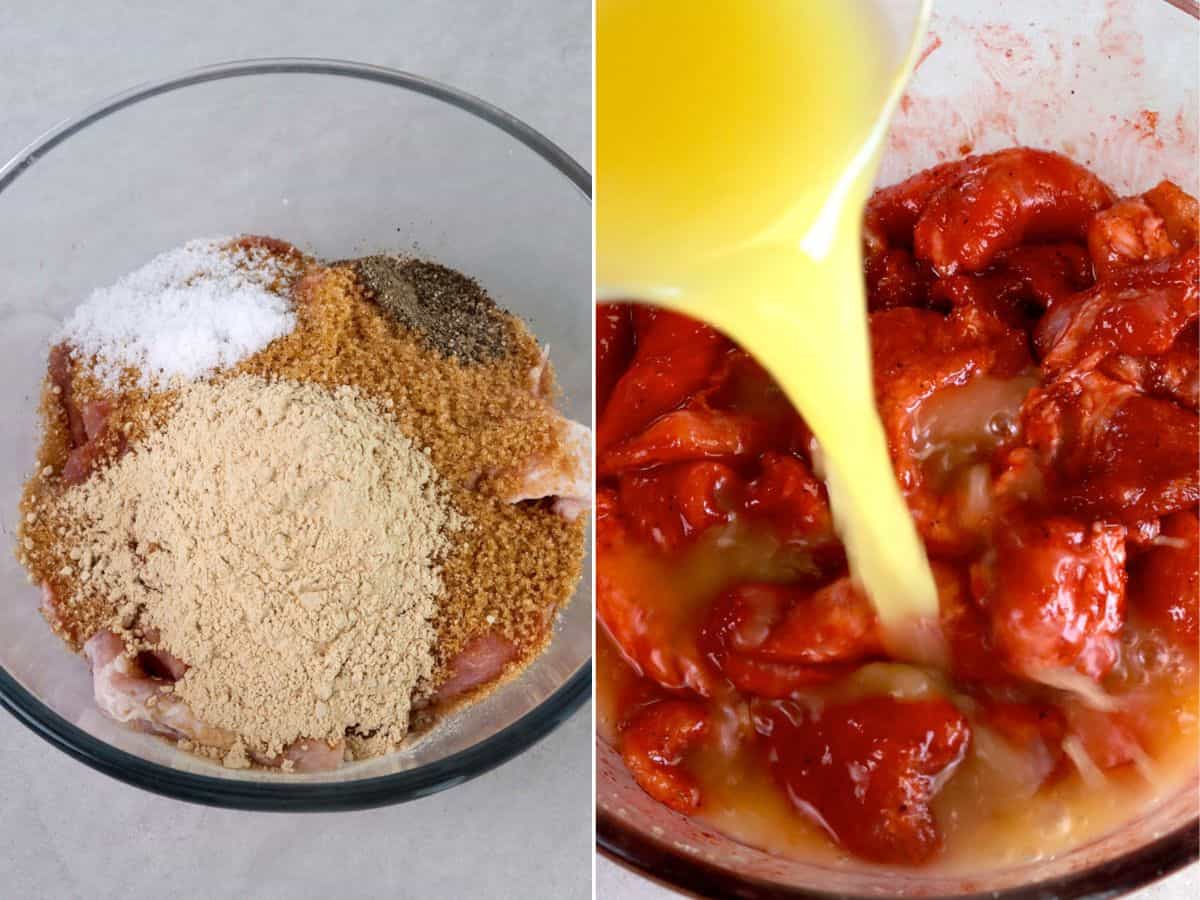
- Slice the pork across the grain into about ¼-inch thickness. You can partially freeze the meat until slightly firm for cleaner, more uniform cuts. In a bowl, massage the seasonings into the meat until the mixture feels sticky and tacky.
- Add a few drops of food coloring for a commercial-style reddish-pink hue and pour in the pineapple juice if using.
- Transfer to resealable bags or airtight containers, then let it cure in the refrigerator overnight for the flavors to develop.
Quick tip
If using pineapple juice, limit the cure to 12-24 hours as the acids might break down the proteins, resulting in a mushy texture.
Ways to cook
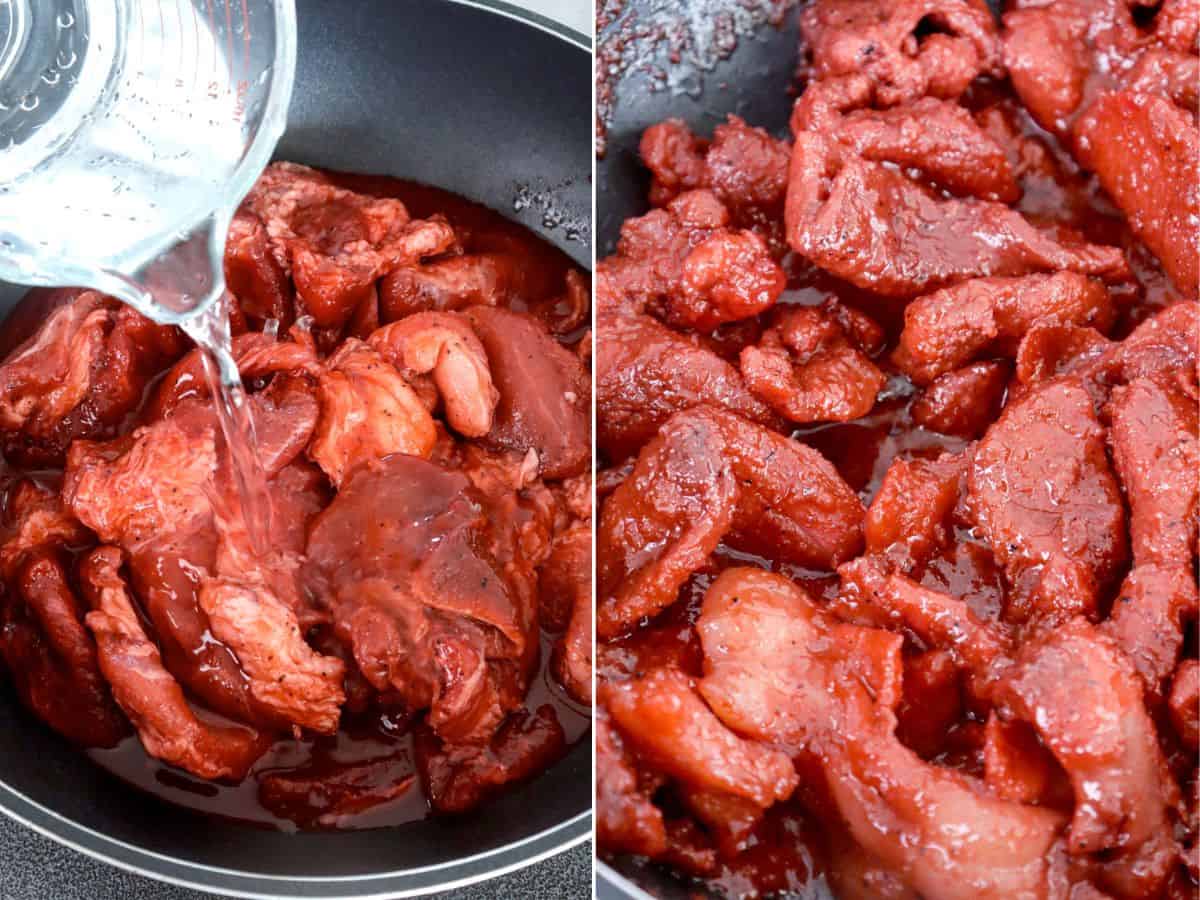
- Stovetop– you can pan-fry straight in hot oil, but I suggest cooking the tocino first in water until fork-tender. Add enough water to cover the meat and simmer until the meat is tender and the liquid is mostly absorbed. Add oil and cook, stirring regularly, until lightly browned and caramelized.
- Grill– you can cook the meat over hot coals or on a tabletop grill for about 3 to 5 minutes per side or until cooked through and nicely charred.
- Oven– arrange the marinated meat in a single layer on a foil-lined baking sheet. Bake, uncovered, in a 350 F oven for about 30 to 40 minutes or until browned and a thermometer inserted in the center of the meat reads 145 F. Turn the meat halfway through cooking and loosely tent with foil if overbrowning before fully cooked.
Serving suggestions
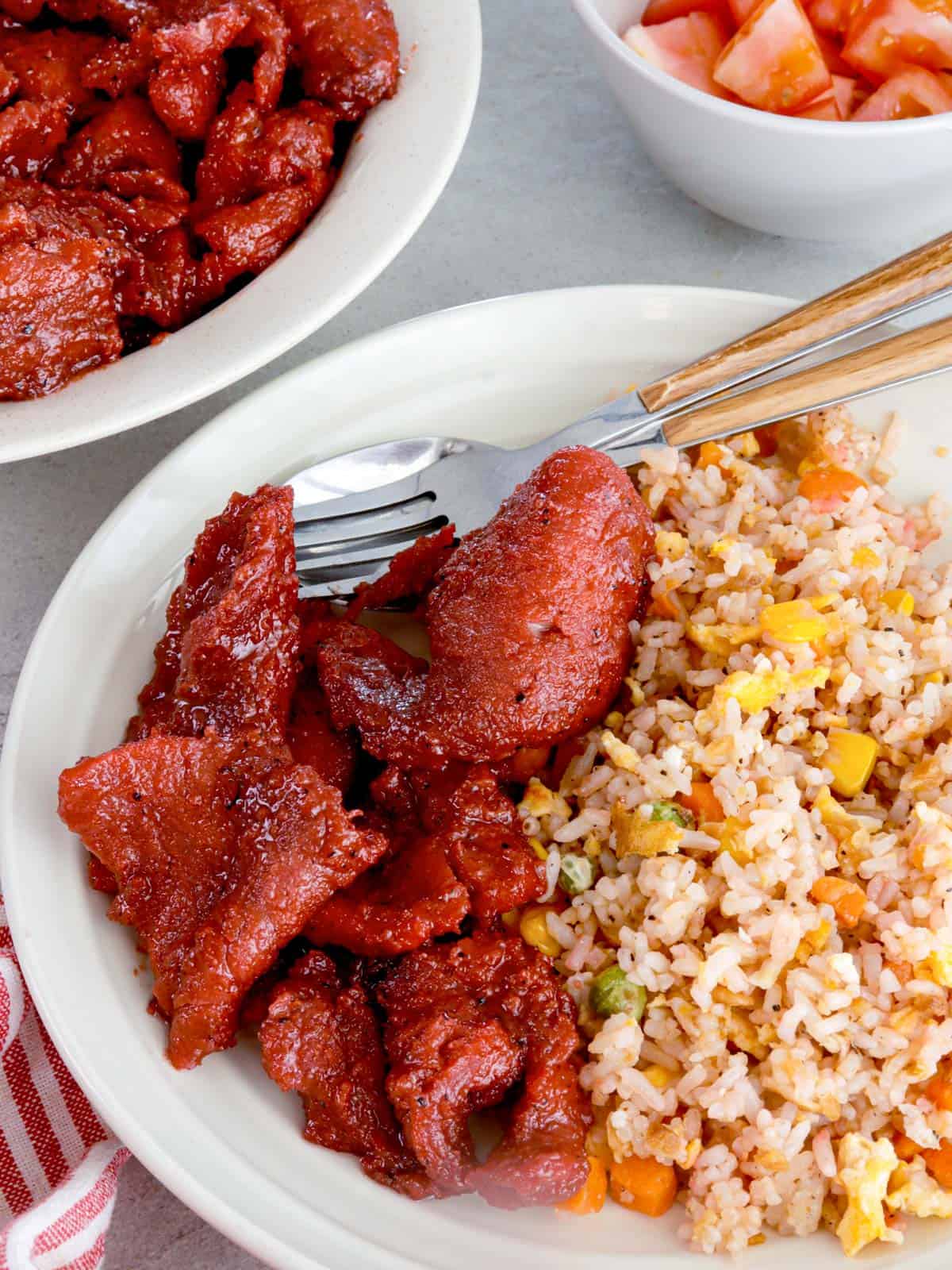
Tocino is typically served as part of an all-day breakfast combo called tocilog, a portmanteau of tocino, sinangag (garlic fried rice), and itlog (sunny-side-up eggs). Level up the experience with a side dish like atchara or spicy vinegar sawsawan.
How to store
- Transfer cooked leftovers to a container with a tight-fitting lid and refrigerate for up to 3 days or freeze for up to 2 months. Warm up in the microwave until thoroughly heated.
- For uncooked tocino, store in a resealable bag or airtight container. Keep refrigerated and cook within 3 days. For longer storage, transfer to a freezer-safe container or resealable bag and freeze for up to 3 months. There’s no need to defrost to cook.
Did you make this? Be sure to leave a review below and tag me @kawalingpinoy on Facebook and Instagram!
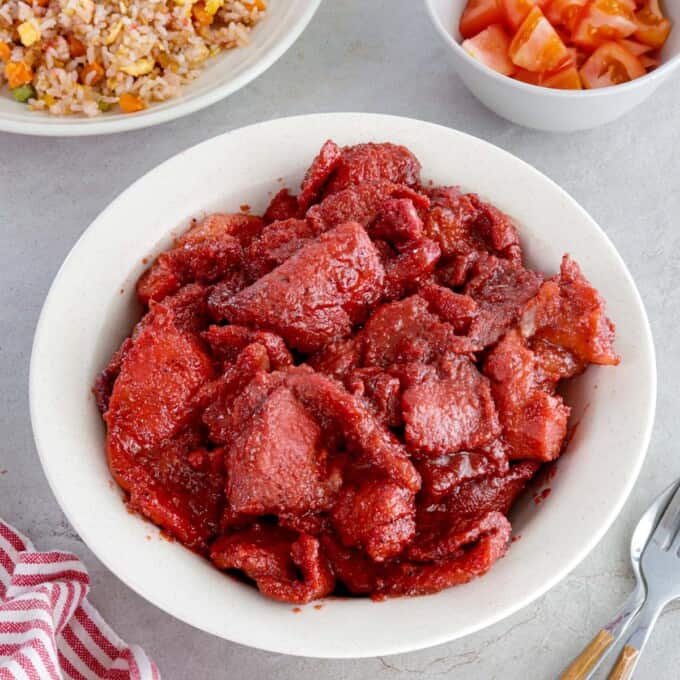
Ditch store-bought and make your own pork tocino at home with simple pantry ingredients and without preservatives. The result? Juicy, tender pork with a sticky-sweet glaze perfect for all-day breakfast!
Course: Breakfast
Servings
Ingredients
- 3 pounds pork butt sliced to ¼-inch thick
- 1 cup brown sugar
- 2 tablespoons garlic powder
- 1 tablespoon salt
- ½ teaspoon pepper
- 2 drops red food coloring optional
- ½ cup pineapple juice optional
- 1 cup water
- 2 tablespoons oil
Instructions
In a bowl, combine pork, brown sugar, salt, garlic, and pepper. Massage thoroughly until the seasonings are well dissolved and incorporated.
Add red food coloring and continue to mix until evenly colored. Add pineapple juice and mix.
Store in a covered container or ziplock bag and refrigerate overnight to cure.
In a pan over medium heat, add pork including marinade and enough water to cover. Bring to a boil.
Lower heat, cover and simmer until meat is tender and cooked through, adding more water in ½ cup increments as needed.
When water is completely absorbed and meat is tender, add oil and cook, stirring regularly, until meat caramelizes. Serve hot.
Notes
- Not a fan of food coloring? Substitute about 1 teaspoon of atsuete powder or ¼ cup of banana ketchup.
- If using pineapple juice, limit the cure to 12 to 24 hours, as the acids might break down the proteins, resulting in a mushy texture.
Video

Nutrition Information
Serving: 142g, Calories: 375kcal, Carbohydrates: 30g, Protein: 32g, Fat: 13g, Saturated Fat: 4g, Polyunsaturated Fat: 2g, Monounsaturated Fat: 6g, Trans Fat: 0.1g, Cholesterol: 102mg, Sodium: 993mg, Potassium: 658mg, Fiber: 0.2g, Sugar: 28g, Vitamin A: 1IU, Vitamin C: 1mg, Calcium: 52mg, Iron: 2mg
“This website provides approximate nutrition information for convenience and as a courtesy only. Nutrition data is gathered primarily from the USDA Food Composition Database, whenever available, or otherwise other online calculators.”